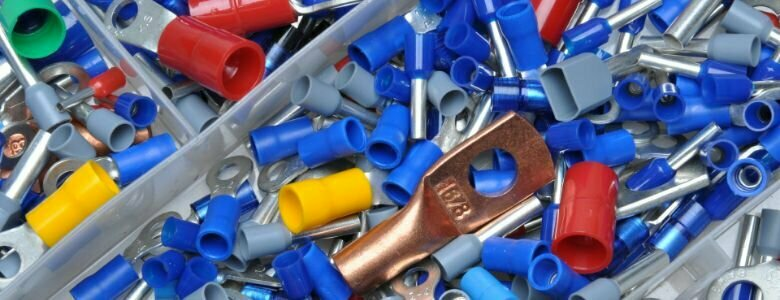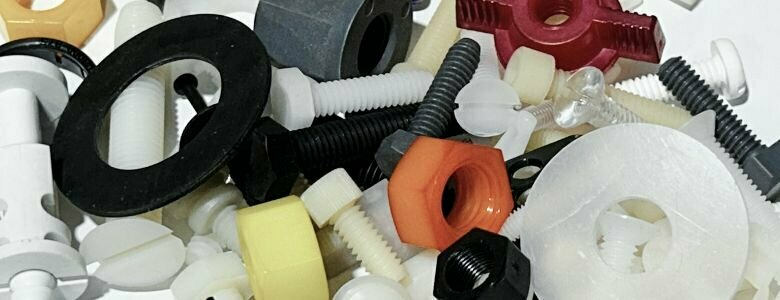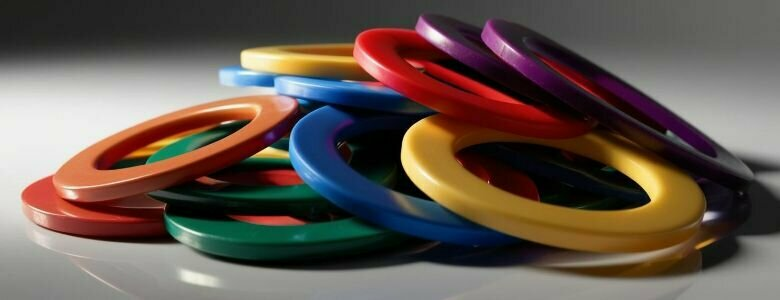
Our fasteners are molded and machined in a variety of materials. Our plastic and nylon fasteners are made of non-metallic materials including acetal, polycarbonate, PVC and polypropylene. Fastener types include: Screws, bolts, nuts, washers, grommets, rivets, plugs, anchors, clamps, spacers, panel fasteners, circuit board hardware, hose clamps, cable ties, standoffs, and threaded rods. Plastic fasteners come in a wide range of colors for detailed, specific projects.
Corrosion Resistant and Electrical Insulation
Our Nylon fasteners and fittings are corrosion resistant and have good electrical insulating properties.
Country wide full-service Capabilities
Our full-service fastener product line includes the capabilities of molding and machining of all plastic and nylon fasteners including tooling fabrication and rapid prototyping. We are here to serve you across the United States, with locations in California and North Carolina.
Nylon is one of the most widely used plastics in the world. All grades maintain great strength and offer extremely good wear resistance. In addition it can withstand sustained contact with a wide variety of chemicals, alkalis, dilute acids etc. Economically Nylon is an excellent product, and approximately ½ the weight of aluminum. This material is also available in glass-filled, further extending it's mechanical properties.
Polyethylene is unparalleled due to its flexibility at reduced temperatures. Polyethylenes are easy to distinguish from other plastics because they float in water. They have higher impact strength, but lower working temperatures and tensile strength than Polypropylene. It can be used where corrosion resistance is important.
Acetal (DELRIN®) provides superior durability and exceptional surface rigidity as well as enhanced dimensional stability. It also shows minimal water absorption, and has a low coefficient of friction and favorable abrasion resistivity.
Polycarbonate (LEXAN®) is a sturdy transparent engineering thermoplastic. It has high heat deflection, plus low frequency and high voltage insulating characteristics making polycarbonate a prime material for electrical and electronic components.
Polypropylene is cost effective material that extends a combination of physical, chemical, mechanical, thermal and electrical properties not found in any other thermoplastic. Polypro also has unparalleled impedance to organic solvents, degreasing agents and electrolytic attack.
Ultem ® (PolyEthermide) is a transparent, amber high performance polymer. Ultem® excels in hot air and water environments. It is hydrolytically stable and UV as well as gamma radiation resistant. It is also inherently flame retardant.
ABS (Acrylonititrile-Butadine-Styrene) is a combination of two copolymers. It can be easily machined to close tolerances and may also be thermoformed. ABS is used in a wide variety of applications including aircraft interior trim, water purification equipment, automotive parts and laboratory equipment.
PTFE with a useful level temp. of between -100°F to +400°F (-73°C to 204°C) proves valuable in many applications. It has superior thermal and electrical insulation properties and a low coefficient of friction.
PTFE Specialty Fasteners:
- PTFE is the name trademarked by Dupont for polytetrafluoroethylene, or PTFE.
- PTFE is a synthetic fluoropolymer.
- PTFE has temperature stability.
- PTFE has a low coefficient of friction.
- PTFE is chemical-resistant.
- Teflon provides a corrosion and heat resistance.
- E&T Fasteners uses PTFE to produce specialty fasteners, including, but not limited to, screws, bolts, hex nuts, washers, spacers, shoulder washers, bushings, and screw insulators for industry applications.
- PTFE wire is also popular and useful, valued for its temperature stability when used in logging surface electronics to avoid melt-back.
- Nothing sticks with any strength to an unheated PTFE surface.
- PTFE has the highest temperature resistance of all plastic materials offered by E&T Fasteners (max service temp of 500 º F).
- The working temperature range of PTFE is -350º to 500º F.
E&T Fasteners offers a wide variety of specialty fasteners produced in PTFE, or polytetrafluoroethylene, including but not limited to, screws, bolts, hex nuts, washers, spacers, shoulder washers, bushings, and screw insulators. Please call on us if you require prototype or production quantities of PTFE parts that you want an experienced PTFE parts manufacturer to produce. We excel in the production of PTFE specialty fasteners that have temperature stability. Our facilities and the outstanding craftsmen, who work with us, are at your disposal.
PTFE is the name trademarked by Dupont for polytetrafluoroethylene, or PTFE. PTFE is a synthetic fluoropolymer that finds numerous consumer and industry applications.
PTFE PTFE fluoropolymer resin was first discovered in 1938 by DuPont chemist Roy Plunkett.
PTFE (PTFE) is a fluorocarbon solid, as it is a high-molecular-weight compound consisting wholly of carbon and fluorine.
Due to Teflon’s extremely low coefficient of friction, it is an excellent material choice for avoiding surface wear. PTFE has no-stick characteristics. Teflon’s static and dynamic coefficients are equal. Nothing sticks with any strength to an unheated PTFE surface. Both virgin and mechanical grades are UV stabilized. Virgin material meets FDA standards and is USDA-approved.
PTFE has many popular industry applications. PTFE is easily machined using mechanical, stamping and tooling equipment. E&T Fasteners can also produce parts in glass-filled PTFE. Some of the shapes we have machined are PTFE discs, nozzles, vent plugs, pipe plugs, and dowels. We also produce specialty fasteners that are custom sizes of standard fasteners.
Industry applications for PTFE heat resistance include semiconductor manufacturing, automotive, water purification, defense, communications, aerospace, computing, pharmaceutical research, biotech, chemical handling, valves and pumps, food processing equipment and much more.
For petrochemical and chemical processing, PTFE is the material choice for gaskets, washers, rings, seals, spacers, and well drilling components because it is corrosion resistant and chemically inert.
As an electrical insulating material, PTFE is one of the best known. PTFE is frequently used to separate conductive surfaces in capacitors. PTFE can be machined into standoff insulators, and many types of high-voltage electrical insulating material devices for electrical components.
PTFE wire has been used in downhole logging tools almost exclusively since the 1960s because of its excellent high temperature performance. Some manufacturers have also used PTFE wire in logging surface electronics to avoid insulation melt-back.
For the semi-conductor industry, PTFE is inert, and its operating temperature makes it especially suitable for various items used in chip manufacturing, including encapsulation devices for quartz heaters.
Virgin PTFE is approved by the FDA for use in the food, beverage, cosmetics and pharmaceutical industries. E&T PTFE specialty fasteners can withstand high temperatures inside baking and drying ovens and other heated industry applications.
Chemical resistance is outstanding with only molten alkali metals and certain halogens, under special conditions, attacking the material. There are no known solvents for PTFE. Electrical insulation and loss properties are remarkable as no other solid material maintains its dielectric constant over such a wide range of temperature and frequency. Parts made of PTFE are virtually unaffected by weather, i.e. extremes of heat and cold and ultra-violet light; moisture absorption is zero. PTFE will not burn under any conditions.
PTFE is compatible with many chemicals such as Nitric Acid Aq. 10%, Perchloric Acid Aq., Phenol Aq., Phosphoric Acid Aq. 3%, Acetic Acid, Acetone, Aluminum Chloride, Aluminum Sulfate, Ammonium Carbonate, Barium Chloride, Benzene, Boric Acid, Butanol, Butyric Acid, Carbon Tetrachloride, Chloral Hydrate, Chloroform, Chloralsulphonic Acid, Chromic Acid, Citic Acid Aq., Cresylic Acid, Cyclohexanol, Cyclohexanone, Diesel Oil, Dioxan, Ether,Diethyl, Ethyl Acetate, Ethylene Dichloride, Ethylene Glycol Aq., Ferrous Chloride Aq, Fluosolic Acid, Formaldehyde Aq., Formic Acid, Glycerin, Heptane, Hydrobromic Acid, Hydrochloric Acid Aq., Hydrofluoric Acid Aq., Hydrogen Sulphide Aq., Hydroquinone, Lactic Acid Aq. 10%, Lead AcetateAq., Magnesium Chloride Aq., Malcics Acid, Maonie Acid Aq., Methyl Acetate, Methyl Ethyl Ketone, Methyl Chloride, Nickel Sulphate Aq., Phosphoric Acid Aq. 10%, Phthalic Acid Aq., Potassium Chloride Aq., Propane Gas, Salicylic Acid, Silver Nitrate, Sodium Acetate Aq., Sodium Bicarbonate Aq., Sodium Hypochlorite 15%Cl, Sodium Nitrate Aq., Stannic Chloride Aq., Stearic Acid, Sulphuric Acid 2%, Sulfurous Acid Aq., Turpentine, Vegetable Oils, Water, Xylene, Xylenol, Zinc Chloride Aq. These chemicals have an A rating regarding Chemical Resistance which translates as “no attack, possible slight absorption, negligible effect on mechanical properties. PTFE is unaffected by large doses of radiation.
PTFE is a white solid at room temperature, with a density of about 2.2 g/cm3. According to DuPont, its melting point is 327 °C (621 °F), but its mechanical properties degrade above 500 °F (260 °C). PTFE gains its properties from the aggregate effect of carbon-fluorine bonds, as do all fluorocarbons. PTFE has excellent flame resistance, and it meets the UL 94 V-0 standard.
As a producer of specialty fasteners, E&T Fasteners is ready to work with you to meet your needs for PTFE hardware.
PVC (Poly Vinyl Chloride) is the most popular of the vinyl family. PVC offers outstanding corrosion and weather impedance. This material is also self-extinguishing per UL flammability tests. With a In addition it has a high strength to weight ratio.
Isoplast ™(Glass-filled Polyurethane) combine the toughness and dimensional stability of amorphous resins with the superior performance and chemical resistance associated with semi-crystalline resins.
Kynar ® PVDF is a high molecular weight crystalline thermoplastic polymer of vinylidene fluoride. It can perform in many applications up to 300°F. It is used extensively in chemical processing applications.
Kynar®/PVDF is a trademarked name of Arkema Corp. for polyvinylidene fluoride, or PVDF.
Kynar® polyvinylidene fluoride (PVDF) is a tough, engineering thermoplastic that offers an excellent balance of performance properties. It has the characteristic stability of fluoropolymers when exposed to harsh thermal, chemical and ultraviolet environments.
- Kynar®/PVDF is a highly non-reactive and pure thermoplastic fluoropolymer.
- Kynar®/PVDF was originally developed in the 1960s for chemical handling and wire insulation and jacketing.
- Kynar®/PVDF has good creep resistance and weatherability.
- Kynar®/PVDF is currently used in applications requiring the highest purity, strength, and resistance to solvents, acids, bases, heat. It is known for low smoke generation during a fire.
- Kynar®/PVDF has an easier melt process than other fluoropolymers because of its relatively low melting point of around 177 °C.
- Kynar®/PVDF has a low density (1.78) and lower cost than other fluoropolymers.
- Kynar®/PVDF has a useful temperature range of -148°F to 302°F
- Can be injected, molded, or welded. Used in the injection molding process.
- Kynar®PVDF is commonly used in the chemical, wet bench, modular clean room, medical and defense industries, chemical industry companies, as well as in lithium ion batteries.
- Tensile Strength at Yield by MPa/psi standards 5075-7250 with a Max service temp of 300° Fahrenheit.
Kynar®PVDF is a brand name for polyvinylidene fluoride, or PVDF. Developed in the 1960s, Kynar® is used in applications requiring the highest purity, strength, and resistance to solvents, Sulphuric acid, Carbon Tetrachloride, Butyric Acid, Boric Acid Aq. and Benzene Sulphate Aq. It is frequently used in semiconductor production, wet bench, modular clean room, chemical industry companies, and clean room industries.
Kynar® is also known as a superior fluoropolymer resin. A highly versatile material, Kynar offers opportunities for many industrial and consumer applications. Important qualities include excellent mechanical strength, high abrasion resistance high purity and resistance to UV and nuclear radiation. Kynar®/PVDF also has low permeability to most gases and liquids.
Kynar® PVDF injection molding and extrusion grades are commonly used to handle harsh chemicals for long periods of time. Kynar® PVDF is chemically resistant to halogens (chlorine, bromine, fluorine, iodine) and strong acids even at high temperatures. E&T Fastener Kynar screws, bolts, nuts and washers are an example of Kynar® PVDF injection molding and extrusion.
Tensile strength exceeds that of PVC and shock resistance is 3-4 times that of PVC.
This material’s Non-toxic and odorless properties have been verified by and are compliant with food hygiene law.
E&T Fasteners can produce everything from standard fasteners such as screws, bolts, hex nuts and washers to threaded rod, dowel pins, jack screws, jack nuts, shoulder bolts, studs etc.